Collaborative
You are the authority on your life. I bring training, framing, and patient curiosity — and we name what's working and revise what isn't, out loud, together.
Telehealth psychotherapy for adults in New York, Maine, Delaware, and Florida. A real back and forth that doesn't pretend the room is empty — from wherever you are.
The job runs. People get the calm version of you. You hold the week together yourself — work, family, the next decision. Inside, the threat-scanning never quite turns off. It lives where nobody looks, and you've gotten very good at carrying it alone.
Burnout that isn't depression. Anxiety hiding behind competence. Roles a difficult parent assigned you years ago that still run the day. The wear left by someone who wore you down while you adjusted around them. It moved in over years. You made room without deciding to.
You talk, I talk back. We look at what followed you in here, give it its clinical name, and work out what to do about it — out loud, together. Fourteen years on exactly these patterns: you won't have to explain why you didn't just leave, or just quit, or just say no.
You are the authority on your life. I bring the training and walk one step to the side — close enough to be useful, never in front. The fog thins where you point the light. I won't do the work for you, and I won't leave you alone with it either.
Hypervigilance eases a notch. The boundary holds without the rehearsed speech. The fog is still back in the trees — that's the honest part — and it reads smaller every time you check. You keep walking.
Good therapy ends with you needing it less. A free call is where it starts — and if I'm not the right fit, I'll say so and point you somewhere better. That's not a pitch line; it's the first boundary you'll watch me keep.
Start with a free call · Read all writing
Telehealth only · NY · ME · DE · FL · In-network through Alma for participating plans, or $225 out-of-network with superbills · Adult individuals, weekly
Call (917) 432-9580 — answered or returned within one business day.

The End
Focus areas
Not every therapist should treat every condition. These are the patterns I know from the inside — clinical training, fourteen years of practice, and credentialing as a Narcissistic Abuse Treatment Clinician (NATC).
You spent years being told your memory of events was wrong — and now you check your own perception the way other people check the weather. Parent, partner, or boss: the aftermath runs the same. We reality-test what happened, build boundaries that hold, and take the internalized critic's badge away. This is the work the NATC credential is for.
Read more — 02You trained for one world and landed in another. The gap between what you know how to do and what the system allows isn't a personal failing — it has a name: moral injury. Common in physicians, founders, and clinicians. We treat the structural reality. No resilience lecture.
Read more — 03You prepare for every outcome, catch what others miss, and rarely look anxious from the outside. The competence is real; so is the exhaustion underneath it. We work on the threat-scanning, the catastrophic preparation, and what happens when the performance stops — on purpose, safely.
Read more — 04The danger may be over, but your body, your sense of self, and your relationships still organize around it. Complex trauma reaches past classic PTSD — dysregulation, shame, identity, attachment. We use a structural approach, not exposure alone, because the injury was structural too.
Read more — 05Everyone escalates to you; there is nowhere obvious for you to escalate. Founders, partners, senior clinicians, attorneys — identity drift, decision fatigue, and a loneliness with excellent compensation. This is a confidential room where the role comes off without consequence.
Read more — 06Moral injury, compassion fatigue, system burnout — plus the specific weirdness of being a clinician who needs clinical care. I've spent fourteen years inside healthcare. You won't have to re-explain the dynamics, the acronyms, or why you can't just take a sick day.
Read more — 07If a narcissistic, borderline, or antisocial parent raised you, the damage is specific: chronic self-doubt, a punishing inner critic, a childhood role — the responsible one, the peacekeeper, the invisible one — that still runs your adult life. Most people don't realize the parent was the problem until the pattern is named. Naming it is where we start.
Read moreHow I work
The pace and shape of the work adjust to the person. These three don't.
You are the authority on your life. I bring training, framing, and patient curiosity — and we name what's working and revise what isn't, out loud, together.
Symptoms are usually downstream. We trace them — to relationships, to history, to the systems you're inside — instead of only managing whatever surfaced this week.
Clear frame, clear scope, clear endings. No PHI by email, no between-session crisis line, no drift into coaching. The container is what makes the work safe — for both of us.
Insurance & fees
Most practice websites make you email them to find out what a session costs. Here are both numbers and both doors, up front, so you can decide before you ever speak to me.
Door one
Your normal copay
I see clients in-network through Alma, which handles the billing and the claims. If your plan is one Alma contracts with, you pay whatever your plan charges for an outpatient mental health visit — the same copay you would pay any in-network therapist. No superbill, no reimbursement paperwork, no waiting to be paid back.
Plans on the panel today include Aetna, Cigna, UnitedHealthcare and its family (Optum, Oxford, UMR, Surest, AllSavers, UHC Student Resources), Anthem Blue Cross Blue Shield (formerly Empire, and Anthem BCBS Maine), Oscar, Carelon Behavioral Health, Meritain, Centivo and the NYC Employees PPO Plan — plus several EAPs, including Optum Emotional Wellbeing Solutions and Resources for Living.
Not on the panel: Medicaid, Medicare, Fidelis and Healthfirst. If that is your coverage, I am not the right fit and I would rather tell you here than after a phone call. The Alma profile always carries the current list.
Door two
$225 per session
Paid at time of service. Each month I send you a superbill — a clinical-grade receipt with the diagnosis and CPT codes your insurer needs — and you submit it to your plan. If you have PPO out-of-network mental health benefits, your plan pays part of that $225 back to you.
How much depends entirely on your plan, so I am not going to quote you a percentage I cannot stand behind. Here is how to find your actual number in about five minutes.
Call the member services number on the back of your insurance card and ask these four questions. Write the answers down.
Then the arithmetic is: allowed amount × your percentage = what your plan sends back to you. Subtract that from $225 and you have your real per-session cost after the deductible is met. Two people with cards from the same insurer routinely get different answers, which is exactly why I would rather you have your own numbers than my average.
Sessions also typically qualify for FSA and HSA funds. Superbills are provided monthly either way, and I am glad to walk through any of this on the consult call.
Why there are no reviews on this page
You will notice this site has no client testimonials. That is deliberate, and it is not because nobody would write one. The NASW Code of Ethics prohibits soliciting testimonials from clients, and in Maine and Delaware that code is incorporated directly into the licensing rules — so for two of my four licenses it is not a guideline, it is the law. Separately, republishing someone's review would identify them publicly as a psychotherapy client, which is exactly the disclosure the privacy rules exist to prevent.
So I cannot hand you social proof. What I can hand you is everything you can check yourself, without taking my word for any of it:
Fourteen years of clinical work — inpatient psychiatry, addiction medicine, and private practice. The writing on this site is the honest sample: it is how I actually think about these problems, at length, for free, before you ever pay me anything. Read a few pieces and you will know whether the fit is there better than a five-star rating would tell you.
Licensure & telehealth
Licensed in New York (LCSW #091241), Maine (LCSW LC22776), Delaware (LCSW), and Florida (LCSW). Telehealth sessions only — you must be physically located in one of those four states at the time of each session, because telehealth is regulated by the state where the client sits, not where the clinician sits. Fees and insurance are covered in full above: in-network through Alma for participating plans, otherwise $225 out-of-network with a monthly superbill.
Recent writing
Short, occasional, low-jargon — written for people who are working with, or working around, someone difficult, while everyone assumes they're fine.
The next step
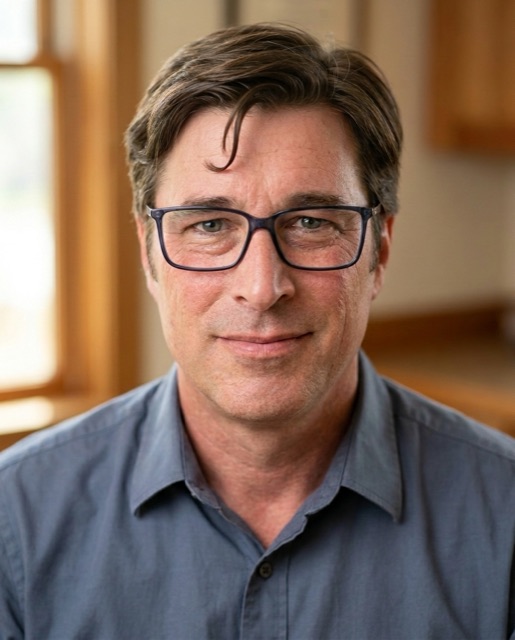
Tell me a little about what's bringing you in and what you've already tried — most of my clients tried self-sufficiency first, for years, and it nearly worked. We'll talk briefly, decide together whether working with me makes sense, and if it does, schedule a first full session.
No fee for the consult. No commitment. If I'm not the right person, I'll tell you and try to point you somewhere better.
You can also just call. (917) 432-9580 reaches the practice directly — if I'm in session it goes to voicemail, and either way you'll hear back within one business day.
Please don't include protected health information (PHI) in this form. We can go into specifics on the call.
This practice is not a crisis service.
If you are in crisis or thinking about harming yourself, this form is not the right channel. Call or text 988 (Suicide & Crisis Lifeline), call 911, or go to your nearest emergency room.
Or call (917) 432-9580 · answered or returned within one business day
Sent to Matthew. You'll hear back within one business day.
Nothing was stored on this site. If it's easier to talk, (917) 432-9580 works too.